
Depression Treatment When Getting Through the Day Takes Everything
Some days it’s not sadness so much as emptiness—nothing lands, mornings feel impossible, and the things that used to matter don’t. When weekly therapy isn’t enough, our outpatient program gives you structured daily support—therapy, psychiatry, and skill-building—while you stay at home in the Dallas–Fort Worth area or San Antonio.
 Verify Insurance


- Dual Diagnosis Experts
- Open Every Day, 8–8
- 4.8★ · 62 Google reviews

We Accept Most Insurance Plans:





We’ll verify your mental health benefits in minutes — 100% confidential.
What depression actually is—and what treatment can change
Depression is more than feeling down. It can flatten motivation, disrupt sleep and appetite, tighten your chest with guilt, and make ordinary tasks feel like climbing a hill in wet clothes. For some people it arrives after a loss or a hard season; for others it builds quietly until life feels unrecognizable.
Outpatient care sits between a weekly therapy appointment and an inpatient stay: enough clinical structure to move the needle, without asking you to disappear from work, family, or the life you’re trying to get back to. At RD, that means psychiatrist-led PHP and IOP with therapy and medication coordinated in one team.
 Can’t get out of bedLost interest in everythingSleep or appetite offGuilt that won’t quit
Signs it may be time for more than weekly therapy
Everyone has hard weeks. These patterns suggest depression may need structured outpatient care—not just more willpower.
- 01
Persistent low mood or numbness
Most days feel heavy, flat, or empty for weeks—not just a rough patch after a bad day.
- 02
Anhedonia
Things you used to enjoy—food, hobbies, people—don’t register anymore. Pleasure feels distant or gone.
- 03
Sleep and energy disruption
Sleeping too much or barely at all, waking at 3am, or dragging through the day no matter how much rest you get.
- 04
Concentration and work impact
Brain fog, missed deadlines, calling in sick, or performing on autopilot while everything feels harder than it should.
- 05
Hopelessness or intrusive guilt
Thoughts that nothing will get better, or a harsh inner voice that won’t let mistakes go.
- 06
Using alcohol or substances to cope
Drinking or using to numb, sleep, or get through the day—which often deepens depression over time.
Evidence-based approaches that work together
Depression rarely responds to a single intervention. We combine therapies with real research behind them and match the mix to your symptoms.
- 01
Cognitive Behavioral Therapy (CBT)
Identify the thought loops that keep you stuck—“nothing matters,” “I always fail”—and learn to interrupt them before they pull you under.
- 02
Behavioral activation
Depression tells you to wait until you feel better to do anything. We rebuild momentum through small, structured actions that loosen its grip.
- 03
Dialectical Behavior Therapy (DBT) skills
Practical tools for emotion regulation and distress tolerance when feelings hit hard and fast.
- 04
Psychiatric medication management
On-site providers evaluate, prescribe, and adjust antidepressants or other medications—in direct coordination with your therapists.
- 05
Group therapy
Small groups where you practice skills, hear you’re not alone, and get honest feedback from people who understand.
- 06
Dual diagnosis when needed
If substance use is part of the picture, we treat depression and use together so progress in one doesn’t unravel the other.
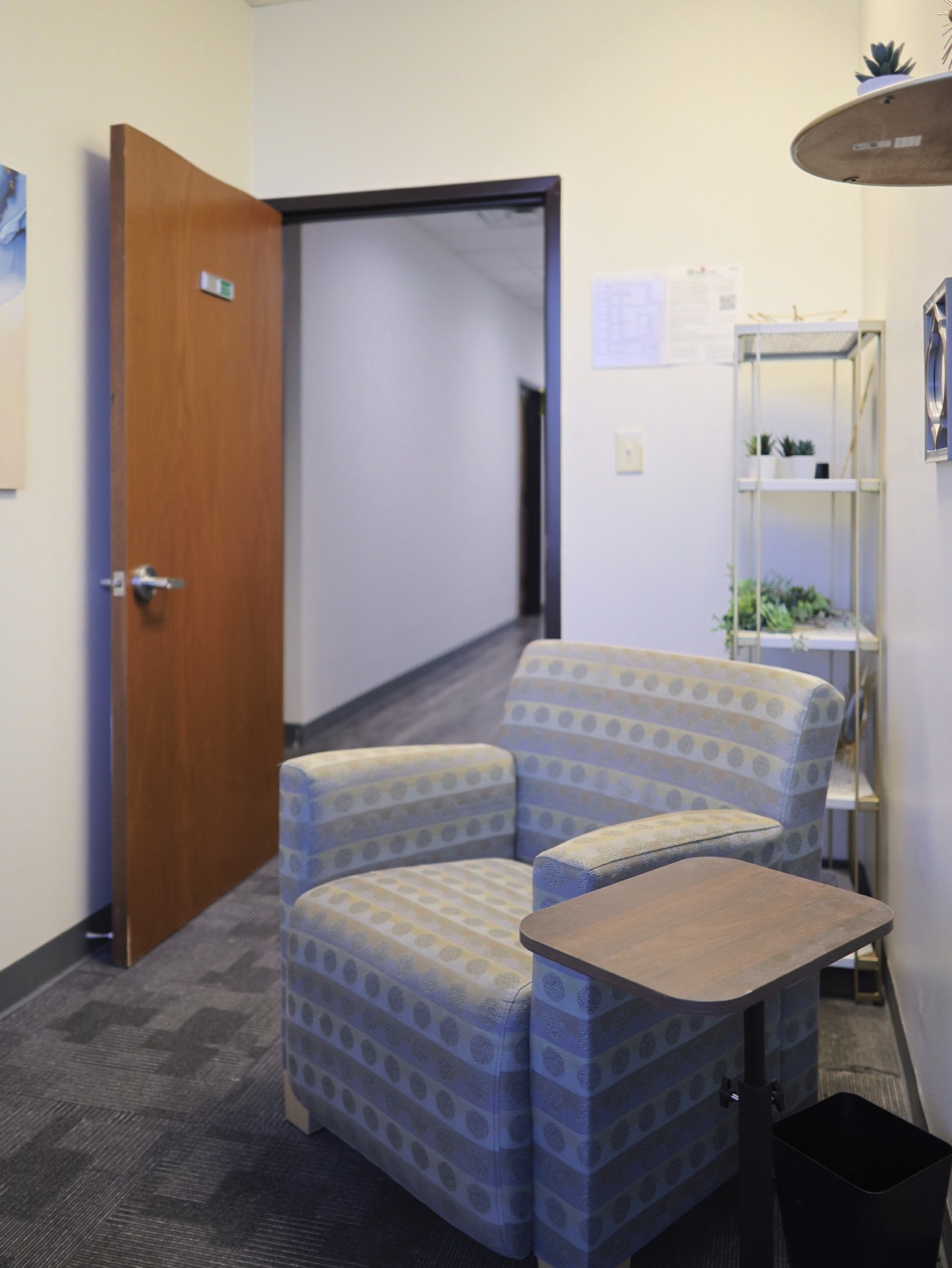
Practice getting better in the life you’re actually living
Inpatient care has its place, but for many people it’s more disruption than they need. Outpatient treatment lets you build skills in the middle of your real week—the job that stresses you, the relationship that hurts, the mornings that used to feel impossible.
That matters clinically. Coping skills stick when you use them where triggers actually live, then bring what happened back to therapy. You don’t have to press pause on everything else to get serious help.
Keep your jobStay with familyEvening IOP availableStep-down as you stabilizeHow intensive should your care be?
Your assessment matches you to the right starting point—and we step you down as you stabilize.
- 01
Partial Hospitalization (PHP)
Our most intensive outpatient level—around 5–6 hours a day, up to five days a week. Ideal after a hospital stay or when symptoms need daily support.
- 02
Intensive Outpatient (IOP)
About three hours a day, three to five days a week, with morning or evening tracks so work and school stay possible.
- 03
Continuing care & step-down
As symptoms ease, frequency tapers with a relapse-prevention plan so support doesn’t stop abruptly.
- 04
Family involvement
With your consent, we help loved ones understand your care and support recovery at home.
What a week of treatment actually looks like
Every plan is individualized, but most weeks blend guided group sessions, individual therapy, and psychiatric check-ins. Between sessions you practice specific skills—behavioral activation tasks, thought records, sleep hygiene—and bring what happened back to the group.
You’ll always know the schedule. No mystery intake maze, no guessing what tomorrow holds. Structure is part of the treatment when depression has stolen your sense of direction.
Guided group therapyIndividual sessionsPsychiatric check-insSkills practice at home
Our Texas clinics
Two Texas outpatient clinics—same clinical team, same hours, same phone number.
- 01
Dallas & Richardson, TX
1251 S. Sherman St., Suites #101–#103, Richardson, TX 75081—serving the Dallas–Fort Worth metro. Open every day 8am–8pm.
- 02
San Antonio, TX
11318 Sir Winston St, San Antonio, TX 78216—serving San Antonio and South Texas. Open every day 8am–8pm.
- 03
Call 469-747-1201
Confidential assessment and free insurance verification—often same-day or next-day start.
How to get started
Four steps, and a real person with you at every one.
- 01
Confidential assessment
A licensed clinician learns your history and recommends the honest level of care.
- 02
Insurance verified for you
We confirm your benefits and explain coverage before you commit.
- 03
- 04
Build skills that last
Relapse prevention and step-down planning so progress holds after treatment.
What clients say
Rated 4.8 out of 5 across 62 Google reviews from clients across North and South Texas.

“Real Deal is without a doubt the most structured and therapeutic rehab program I have ever attended. It has brought me to one year in sobriety and I don't know what I would have done had I not participated in the program. I highly recommend Real Deal to anyone struggling with alcohol and/or drugs. It's amazing. Just try it and you will see for yourself!”
“Realdeal wellness and therapy will always have a special place in my heart for all the opportunities and care they've provided. They helped pave the way for me to achieve sobriety and build a better life for myself and when I needed them the most they were there in a heartbeat. Extremely grateful for their services and the environment they provide for recovery.”
“Real deal is a truly rare place that has instrumental in my rehabilitation. The staff truly cares deeply about you and wants you to succeed. Also Real Deal is one of not many outpatient rehab places that takes primary mental health cases. Highly recommend this place and thank you to everyone who helped me.”
“I love all of these guys. These guys made me feel better. They made me think better. I don't feel those ways anymore. Before I came here, I was certain I wouldn't be alive for much longer. These guys fixed that.”
“The Real Deal is an incredible program that prioritizes accessibility more than almost any other PHP, IOP, and Housing program. With housing fees at lower price point than a majority of sober livings, the option to have your pet with you, and a supportive recovery community, they really do try to eliminate barriers to care as much as possible.”
“Real Deal is different then the others. It offers flexible support for recovery, allowing you to live at home while attending therapy and counseling sessions. It's designed to fit your schedule and provides tools to maintain sobriety and prevent relapse. The focus on mental health is a great way to get to the root of what's gone wrong time and time again. Cannot recommend enough!”
“Real Deal is full of people who are passionate in helping others obtain and maintain their sobriety. They are always willing to lend a helping hand without judgement. They also have employees with real world experience using their own experiences to help others heal.”
Related treatment pages
- 01
Anxiety Treatment
When worry and panic hijack your body
- 02
PTSD & Trauma
When the past keeps intruding on the present
- 03
Mental Health Treatment
Full overview of our mental health programs
- 04
Dual Diagnosis
When depression and substance use overlap
- 05
PHP
Intensive daytime structure
- 06
IOP
Flexible morning or evening tracks
Common questions about depression care
Straight answers before you call.
You attend structured therapy and psychiatric sessions during the day or evening while living at home. Most people start in PHP or IOP depending on symptom severity.
PHP is more intensive—roughly 5–6 hours a day, up to five days a week—when symptoms need close daily support. IOP is about three hours a day, three to five days a week, with morning or evening tracks.
Yes. Our psychiatric team evaluates whether medication is appropriate, prescribes when indicated, and coordinates directly with your therapists so care stays connected.
Yes. When alcohol or other substances overlap with depression, we treat both in one coordinated dual diagnosis plan rather than ignoring one to focus on the other.
Often yes. PHP is a common step-down after inpatient psychiatric care—enough structure to stabilize without another overnight stay.
Many people do, especially in evening IOP. Your assessment helps match intensity to what your life can realistically hold.
Most major plans cover outpatient mental health treatment. We verify benefits for free before you commit.
Usually within a day or two of your first call. Call 469-747-1201 for a confidential assessment.